What Is Machine Learning for School Students: An Easy-to-Understand Guide
Published: 9 Dec 2025
What if you could teach a computer to recognize your face, sort your playlists, or even predict your homework score? You can, and it all starts with a simple question: What is machine learning for school students? It’s your key to building the future.
Machine learning (ML) is the powerful 21st-century technology that shapes how apps, websites, and smart devices make decisions. For students, understanding ML is more than just tech talk; it’s a way to build essential problem-solving skills, explore modern careers, and demystify the digital world you interact with every day. From recognizing faces in photos to filtering spam from your inbox, ML is already a part of your life. Learning its basics now empowers you to use technology not just as a consumer, but as a confident, creative, and responsible innovator.
In this article, we’ll break down what is machine learning for school students, how it works, the different types of ML, real-life examples, benefits, challenges, practical ways to start learning it, simple ML projects, essential skills, future trends, and recommended resources.
Let’s explore machine learning in detail
Key Takeaways
- Students use machine learning every day through apps, games, and online tools.
- ML helps computers recognize patterns and make predictions based on data.
- Learning ML develops problem-solving skills by guiding students step by step.
- It improves logical thinking and strengthens analytical reasoning skills.
- Hands-on ML projects encourage creativity and experimentation with ideas.
- Early exposure prepares students for future careers in AI and STEM fields.
- Understanding what is machine learning for school students boosts digital literacy and responsible use of technology.
What Is Machine Learning?
Machine learning is a way for computers to learn from examples and improve their performance without being programmed step-by-step. It helps students understand how technology makes decisions, recognizes patterns, and adapts over time. Learning this concept early builds curiosity and gives students a clearer idea of how modern tools and apps work behind the scenes. Here’s what ML really means in simple terms:
- Computers learn from data instead of memorizing rules.
- They make predictions, like suggesting videos or search results.
- They improve with practice, just like students.
- ML powers tools like voice assistants and photo tagging.
- It encourages logical thinking and problem-solving.
Machine learning is the backbone of many modern technologies, making it a valuable concept for students to learn early. Grasping this core idea is the first step to answering what is Machine Learning for school students, in a meaningful way:
Why Machine Learning Matters for Students
In today’s digital-focused world, students interact with smart tools and AI-driven apps more than ever, making machine learning an essential skill to understand early. Machine learning matters for students because it builds important skills and helps them understand the technology they use every day. Learning ML early teaches logical thinking, creativity, and problem-solving, which are valuable in school and future careers. Here’s why ML is becoming important for students:
- Strengthens analytical and step-by-step thinking.
- Sparks creativity through hands-on projects.
- Improves digital literacy by showing how apps work.
Together, these skills help students become confident and responsible digital users. Early exposure gives them a practical head start in fields like AI, robotics, and data science. That’s why learning what is machine learning for school students is especially valuable today. Learn more about how AI is transforming education: How AI is Changing the Education System: Opportunities, Challenges, and the Future
How Machine Learning Works
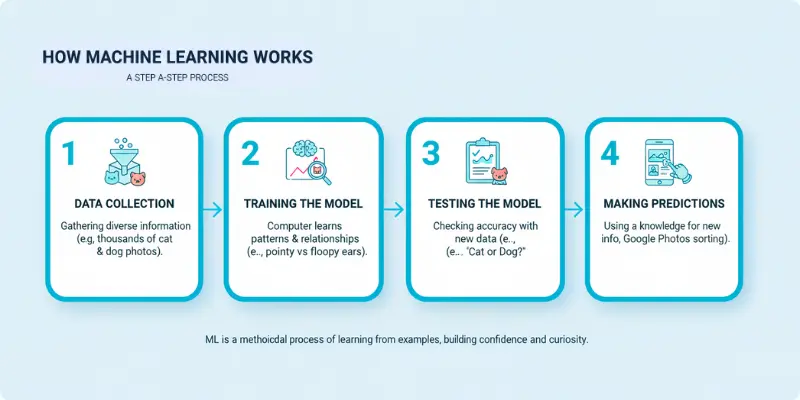
Machine learning (ML) is a branch of artificial intelligence that enables computers to learn from data and improve over time. Instead of following strict instructions, ML systems study examples, recognize patterns, and use that knowledge to make predictions, using a machine learning algorithm. This helps students see that computers aren’t “thinking” like humans; they’re simply processing information in a structured way. With this understanding, modern AI tools feel clearer and easier for students to relate to. These are the four basic steps of how ML works:
1. Data Collection
Data collection is the stage where the computer gathers all the information it needs to learn. For instance, collecting thousands of photos of cats and dogs. This step is important because better data leads to better learning and more accurate results.
2. Training the Model
Training the model is when the computer studies the data to detect patterns and relationships. For instance, recognizing that cats usually have pointy ears, while dogs often have floppy ears. This step teaches the computer how to make sense of real-world differences.
3. Testing the Model
Testing the model checks whether the computer learned correctly and can make accurate predictions. For example, presenting a new image and asking, “Is this a cat or a dog?” This step ensures the model performs well before being used in practical applications.
4. Making Predictions
Making predictions is when the model uses its learned knowledge to handle new information and provide results or suggestions. For instance, Google Photos automatically sorts your pictures into categories like cats, dogs, or landscapes. This step shows how ML becomes useful in everyday tools.
By understanding these steps, students realize that ML is a methodical process of learning from examples. This knowledge not only builds confidence but also encourages curiosity about how AI technologies function in real life.
Types of Machine Learning
Machine learning isn’t a one-size-fits-all process; different types of ML help computers learn in distinct ways. Understanding these types gives students a broader perspective on how smart systems operate in games, apps, and everyday online tools. It also makes it easier to recognize ML in real-life applications, from recommendation engines to virtual assistants. Different ML types help computers learn in different ways. The three main types are:
1. Supervised Learning
The computer learns from labeled data, meaning correct answers are provided. For instance, predicting a student’s exam scores based on past performance data. This type is useful for tasks where clear examples exist, allowing the system to learn patterns and make accurate predictions.
2. Unsupervised Learning
The computer identifies patterns in data without any labels or predefined answers. For example, automatically grouping students by similar hobbies or interests. It is ideal for discovering hidden structures in data and generating insights without prior guidance.
3. Reinforcement Learning
The computer learns through trial and error, improving its performance by receiving rewards or penalties. For instance, training a robot to navigate a maze or teaching a video game character to complete challenges. This type emphasizes learning from experience and adjusting strategies to achieve long-term goals.
By understanding these types, students can see why different applications require different ML approaches. This practical perspective makes machine learning more tangible, relatable, and easier to grasp in everyday technology.
Benefits of Learning Machine Learning for Students
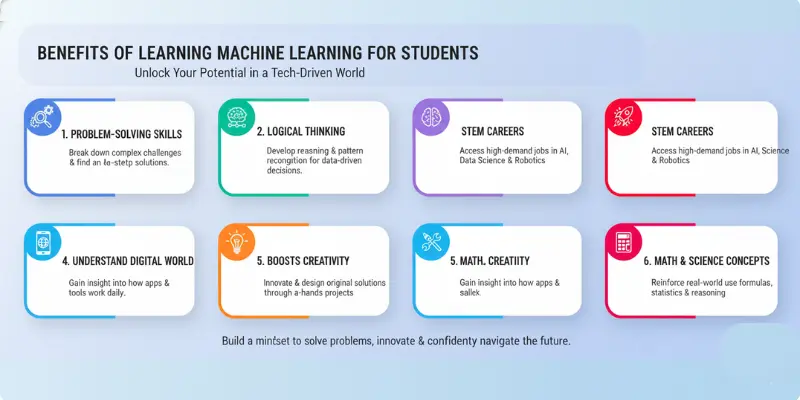
Learning machine learning isn’t just about coding or algorithms; it’s about developing a way of thinking that helps students solve problems logically and creatively. It also teaches them to approach challenges step by step and think critically. Exploring ML gives insight into how technology powers the apps and tools they use daily, showing how these skills can shape their academic and future career paths. The main benefits are:
1. Builds problem-solving skills
Students learn to break down complex problems and find solutions step by step, improving their ability to tackle challenges both in school and real-life scenarios.
2. Encourages logical and analytical thinking
ML exercises reasoning and pattern recognition, helping students understand cause-and-effect relationships and make data-driven decisions.
3. Opens doors to modern STEM careers
Knowledge of ML gives students an edge in fields like AI, data science, and robotics, preparing them for high-demand future careers.
4. Helps students understand the digital world
They gain insight into apps, games, and tools they use daily, enabling them to interact with technology more effectively and responsibly.
5. Boosts creativity through hands-on projects
Experimenting with ML fosters innovation and design thinking, allowing students to develop original solutions and explore new ideas.
6. Improves understanding of math and science concepts
ML applications reinforce real-world use of formulas, statistics, and scientific reasoning, making abstract concepts more tangible and easier to grasp.
By learning machine learning, students not only gain technical skills but also build a mindset that prepares them to solve problems, innovate, and confidently navigate a tech-driven world. To explore the broader impact of technology on learning, check out our guide on: The Role of AI in Education, Transforming Learning for the Digital Age.
Real-Life Examples of Machine Learning for School Students
Students grasp concepts faster when they see machine learning in their daily lives. Connecting ML to familiar apps and tools makes learning engaging and practical. ML isn’t just a theory; it actively shapes the technology students use every day. Seeing ML in action helps students move from a textbook definition to truly understanding what is Machine Learning for school students.
- YouTube Recommendations: Suggests videos based on what you watch.
- Google Maps: Predicts traffic patterns and arrival times using past data.
- Voice Assistants (Siri, Google Assistant): Recognize and respond to your voice.
- Online Games: Adjusts difficulty levels and predicts player moves.
- Spam Detection: Filters junk emails and messages automatically.
- Photo Recognition: Identifies faces, objects, and scenes in images.
These examples help students see that ML is not just a classroom topic; it’s part of the tools they use every day, highlighting its practical importance and making learning more relatable.
Essential Skills Students Build Through Machine Learning
Learning ML gives students skills beyond coding, boosting academic success and future STEM opportunities. Exploring machine learning helps them understand technology while enhancing problem-solving, creativity, and logical thinking, essential for school projects and a tech-driven world.
- Programming: Learn Python basics, loops, functions, and libraries like NumPy.
- Data & Visualization: Collect, clean, analyze, and visualize data.
- Math & Logic: Apply statistics, probability, and algebra to real problems.
- Problem Solving: Break challenges into steps, test models, and refine solutions.
- Teamwork & Communication: Collaborate, document work, and explain ideas clearly.
- Ethical Awareness: Understand fairness, bias, transparency, and privacy in tech.
These skills not only support academic growth and STEM readiness but also help students become responsible and thoughtful digital citizens.
Challenges Students Might Face When Learning ML
While machine learning is exciting, students can sometimes feel overwhelmed by its technical concepts and unfamiliar terms. Recognizing potential challenges early helps teachers, parents, and students prepare better strategies for learning and practicing ML. Understanding these obstacles ensures a smoother and more effective learning experience. The most common challenges include:
- Difficulty understanding algorithms: Some concepts can be abstract or complex.
- Limited access to computers or software: Hands-on practice may be restricted.
- Intimidation from technical terms: Vocabulary can feel confusing at first.
- Trouble connecting ML concepts to daily life: Students may struggle to see practical applications.
- Lack of structured learning materials: Guidance and clear resources are sometimes missing.
By being aware of these challenges, students and educators can adopt strategies to overcome obstacles, making ML learning more approachable, engaging, and successful.
How School Students Can Start Learning Machine Learning
Many students are curious about machine learning but often feel unsure where to begin. Starting with small, manageable steps helps make the learning process less intimidating and more enjoyable. By starting early with simple, hands-on approaches, students can gradually build confidence and foundational skills in ML. The most effective tips to get started:
1. Start with beginner-friendly platforms
Tools like Scratch, Teachable Machine, or Code.org allow students to experiment with ML concepts in a visual, interactive way without coding experience. These platforms make abstract ideas tangible and engaging for young learners.
2. Learn basic math skills
Focus on patterns, logic, and simple statistics, which form the foundation for understanding ML algorithms. A strong grasp of these basics makes it easier to understand how data drives machine learning.
3. Experiment with mini-games and interactive tools
Fun simulations and ML mini-projects help students see concepts in action and retain learning better. Hands-on experimentation encourages curiosity and builds practical problem-solving skills.
4. Join school tech clubs or robotics teams
Collaborating with peers and participating in projects encourages practical application and problem-solving. Team activities also foster creativity and communication skills while exploring ML concepts.
5. Explore introductory videos and kid-friendly ML courses
Online tutorials and beginner courses make complex concepts approachable and spark curiosity in the students. They provide structured guidance and help students progress at their own pace.
With the right tools and guidance, students can begin learning ML early, gradually building their skills while having fun exploring technology.
Step-by-Step Guide to Learning Machine Learning
Learning ML step by step helps students move from basic ideas to real, hands-on applications with confidence. By breaking the process into manageable stages, students can build skills gradually without feeling overwhelmed. You can start your machine learning journey as:
- Learn Python Basics: Variables, loops, functions, and beginner libraries.
- Understand Data: Collect, clean, and analyze datasets.
- Explore Core ML Concepts: Supervised learning, unsupervised learning, classification, and regression.
- Work on Small Projects: Predict grades, classify images, or build mini chatbots.
- Join Courses or Specializations: Structured lessons with mentorship.
- Keep Practicing: Experiment, analyze results, and refine skills continuously.
This structured path helps students learn machine learning efficiently, stay motivated, and gain practical experience that builds long-term confidence.
Practice & Community Learning for Students
Learning becomes easier, more engaging, and more meaningful when students connect with others who share the same interest. Practice builds confidence, and being part of a community provides motivation, guidance, and real-world exposure.
- Join ML communities: Online forums or school clubs for support and collaboration.
- Participate in competitions: Beginner-friendly contests like Kaggle or AI4ALL.
- Engage in mentorship programs: Guided projects and research opportunities that offer direction and inspiration.
Community learning strengthens teamwork, boosts creativity, and helps students apply machine learning skills in practical and enjoyable ways.
Simple Machine Learning Projects for School Students
Hands-on learning helps school students understand machine learning far better than theory alone. By trying out simple projects, students can see how ML works in real life, making abstract concepts more tangible and exciting. Projects also encourage experimentation, problem-solving, and creativity. The ideas for the project are:
- Image classifier using Teachable Machine: Train models to recognize objects: fruits, animals, or school supplies.
- Voice recognition activity: Explore how computers can identify words or commands from recorded voices.
- Sorting fruits by size or color: Use simple rules to classify items, introducing basic ML logic.
- Predicting weather with past temperature data: Analyze historical data to make simple predictions.
- Making a chatbot with basic responses: Learn how AI can understand and reply to simple text inputs.
These small projects help students build confidence and ignite curiosity, laying the foundation for more advanced ML exploration later.
Recommended Resources for Machine Learning for Students
Having access to reliable resources makes learning machine learning easier and more engaging for students. The right guidance helps them understand concepts, practice skills, and explore ML hands-on:
- Online Courses: Beginner-friendly tutorials for Python and ML basics.
- Books & Reading Guides: Clear, example-driven introductions to concepts.
- Practice Platforms: Datasets, mini-projects, and coding exercises.
- Mentorship & Programs: Structured support for project-based learning.
Using these resources helps students learn effectively, enjoyably, and build a strong foundation for future ML projects.
Future of Machine Learning for Students
The future of machine learning offers exciting opportunities for students who begin early. As industries rely more on automation and intelligent systems, ML skills will play an important role in academics and careers. Understanding these trends helps students stay prepared for a technology-driven future.
- High demand for ML skills: More careers will require basic ML knowledge.
- Rise of no-code ML tools: Students will build models without deep coding.
- AI-powered learning: Personalized feedback and smart tutors will become standard.
- Cross-disciplinary use: ML will support fields like arts, finance, and healthcare.
- More youth AI programs: Competitions and incubators will increasingly focus on ML.
With these trends shaping the future, students who learn ML now gain a strong advantage. They develop skills that open doors to new academic paths, creative projects, and emerging careers.
Conclusion
Machine learning for school students is more than just a technology concept; it is a tool that builds problem-solving skills, logical thinking, and creativity. By understanding how ML works through real-life examples and simple projects, students can see how it shapes the apps and tools they use every day. Learning what is machine learning for school students, early not only prepares them for future STEM careers but also helps them navigate the digital world confidently and responsibly. With curiosity, hands-on practice, and guided learning, students can turn today’s ML lessons into tomorrow’s opportunities.
FAQs
Machine learning (ML) for students means using computers to recognize patterns and make decisions on their own. It helps students learn how technology works behind apps, games, and everyday digital tools, while building problem-solving and analytical skills.
In school, ML refers to teaching students how computers learn from data. It is introduced through simple examples, like predicting grades, analyzing images, or identifying trends, so students can understand modern technology and use it confidently.
ML is used in education through personalized learning apps, AI tutors, automated grading tools, and systems that track student progress. It helps teachers save time and gives students a customized learning experience.
The four main types are:
- Supervised Learning: Learning from labeled examples.
- Unsupervised Learning: Finding patterns without labels.
- Semi-Supervised Learning: Mix of labeled and unlabeled data.
- Reinforcement Learning: Learning by trial, error, and rewards.
Machine learning is like teaching a robot with examples instead of instructions. If you show it many pictures of cats and dogs, it learns to tell them apart on its own.
ML can be easy if students start with basics like Python, simple datasets, and beginner-friendly tools. With step-by-step learning, it’s very manageable, even for young learners.
Yes. Many 14-year-olds successfully learn AI and ML. Beginner courses, no-code tools, and simple projects make it accessible for teens.
Basic math helps, especially statistics, probability, and algebra, but students can start learning ML concepts without mastering advanced math. As they progress, they naturally pick up the math behind it.
Yes. Tools like Teachable Machine, Scratch extensions, and no-code ML platforms allow kids to build models using drag-and-drop interfaces before learning programming.
Most students can grasp the basics of ML in 4–8 weeks, depending on how consistently they practice. With small projects, they usually gain confidence even faster.


- Be Respectful
- Stay Relevant
- Stay Positive
- True Feedback
- Encourage Discussion
- Avoid Spamming
- No Fake News
- Don't Copy-Paste
- No Personal Attacks
- Be Respectful
- Stay Relevant
- Stay Positive
- True Feedback
- Encourage Discussion
- Avoid Spamming
- No Fake News
- Don't Copy-Paste
- No Personal Attacks
